Availability changes. Ask for the current selection and a quotation before visiting.
What it is
The short version.
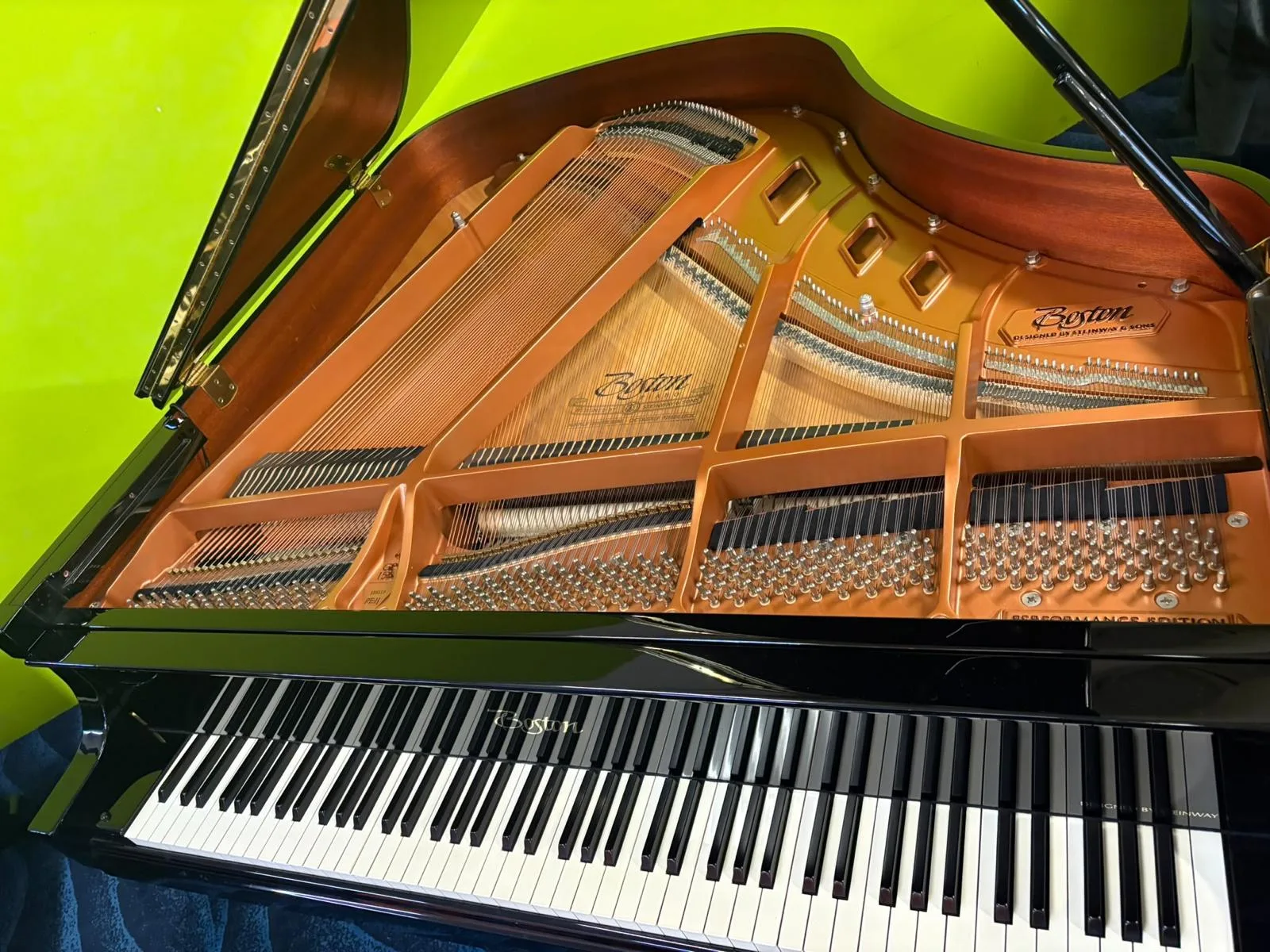
Steinway and Sons created the Boston line to offer instruments below its own name at a lower price. The design is Steinway’s and the grands are built for it at a Kawai factory in Japan.
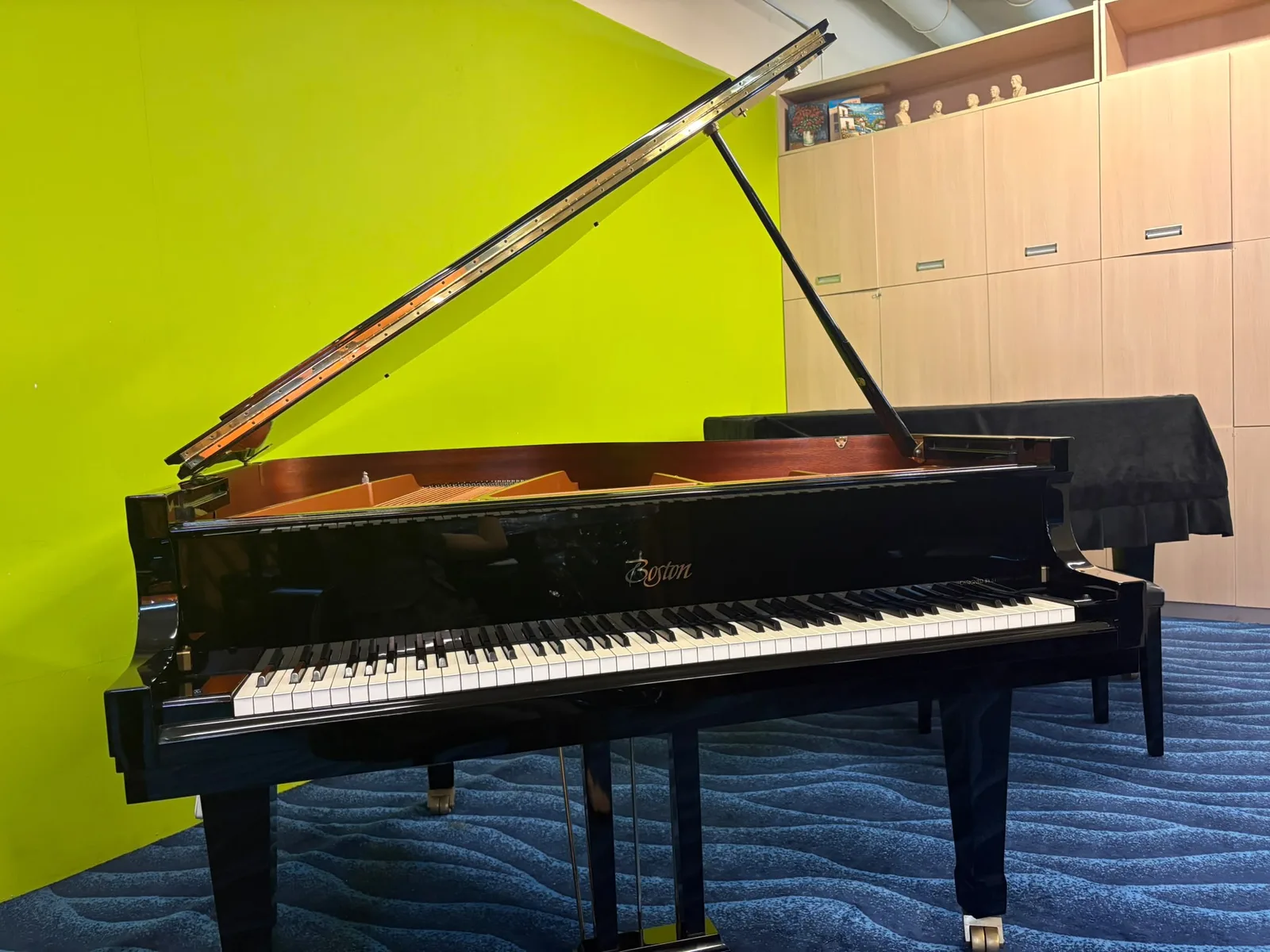
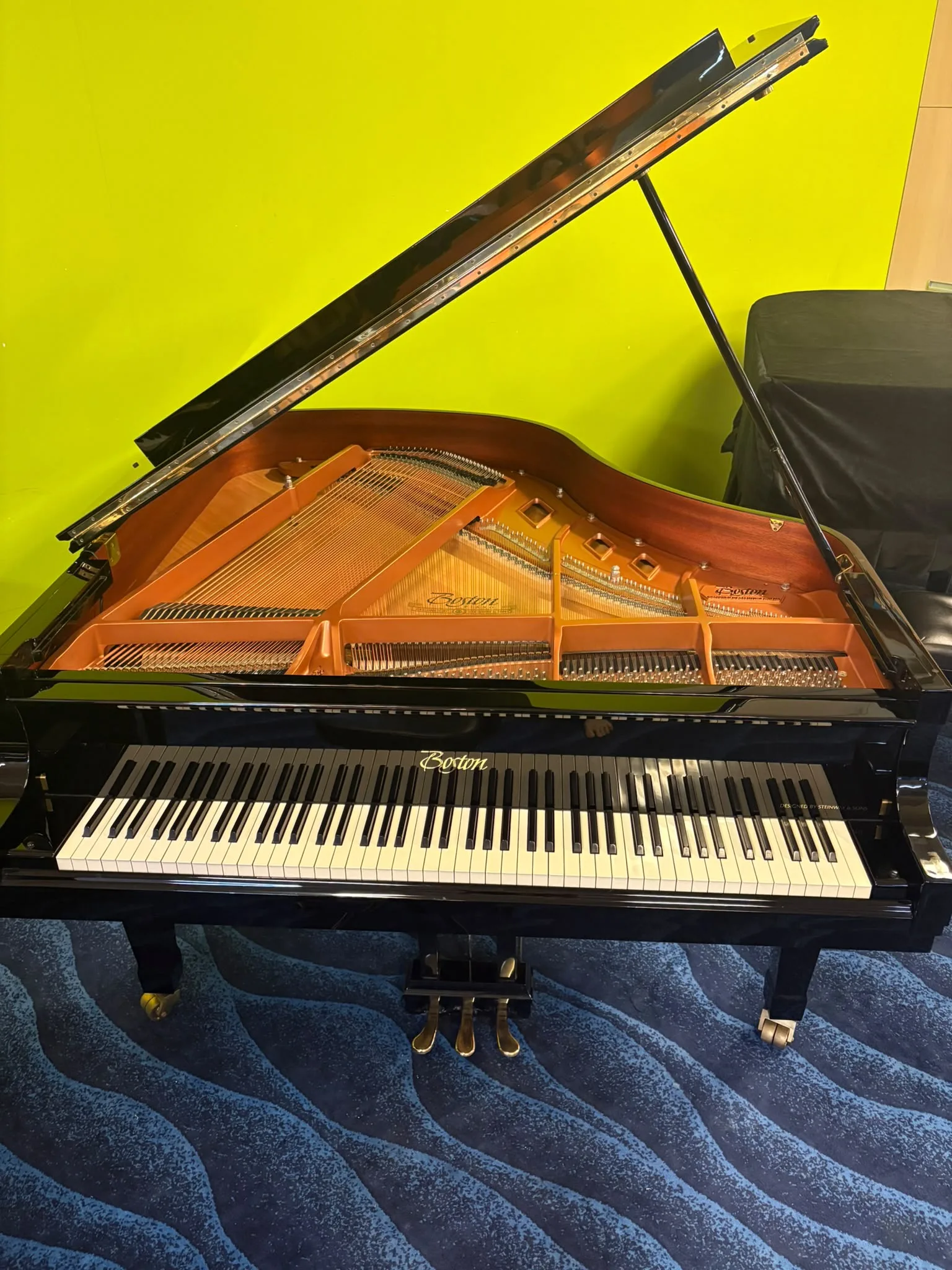
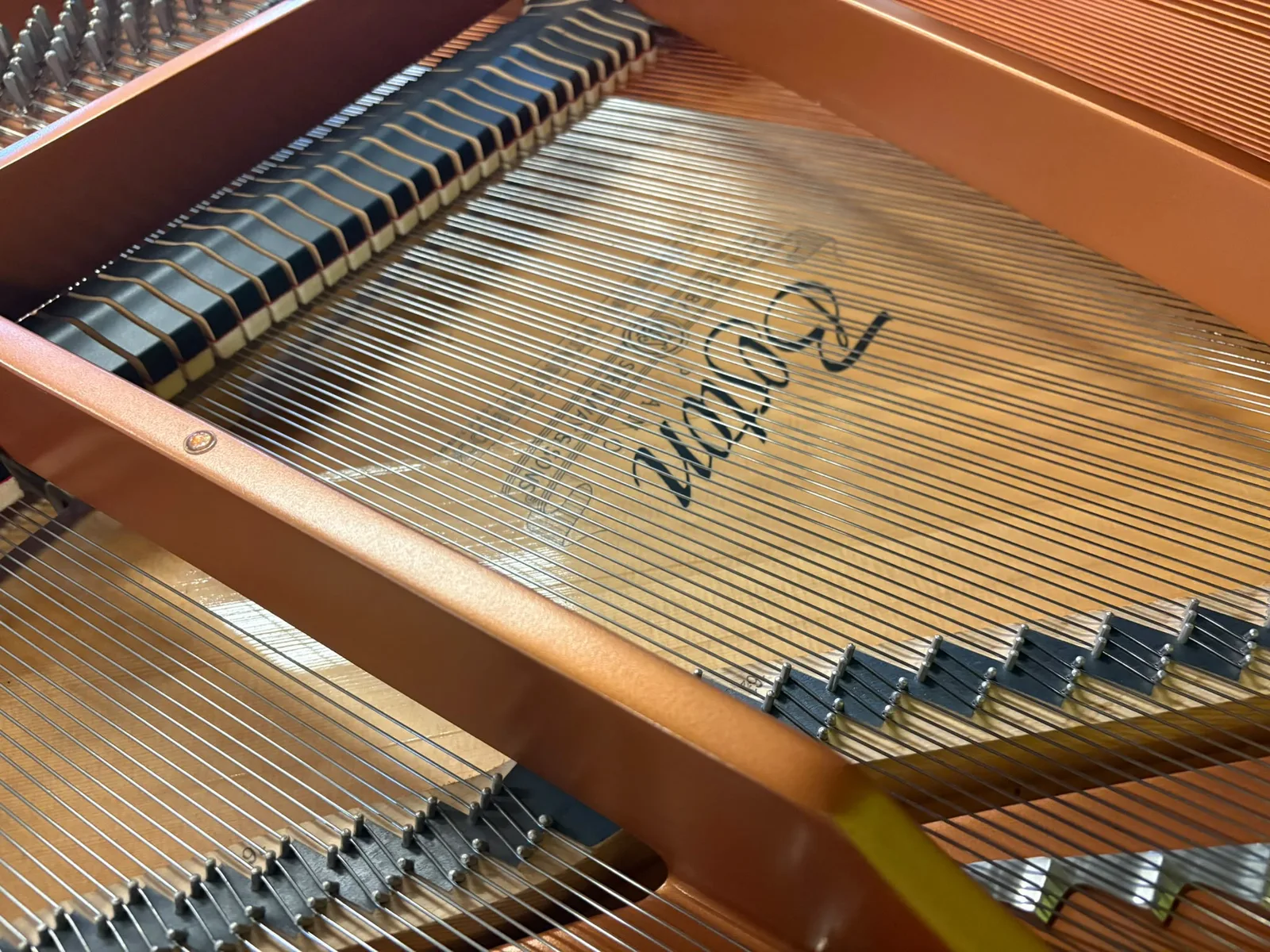
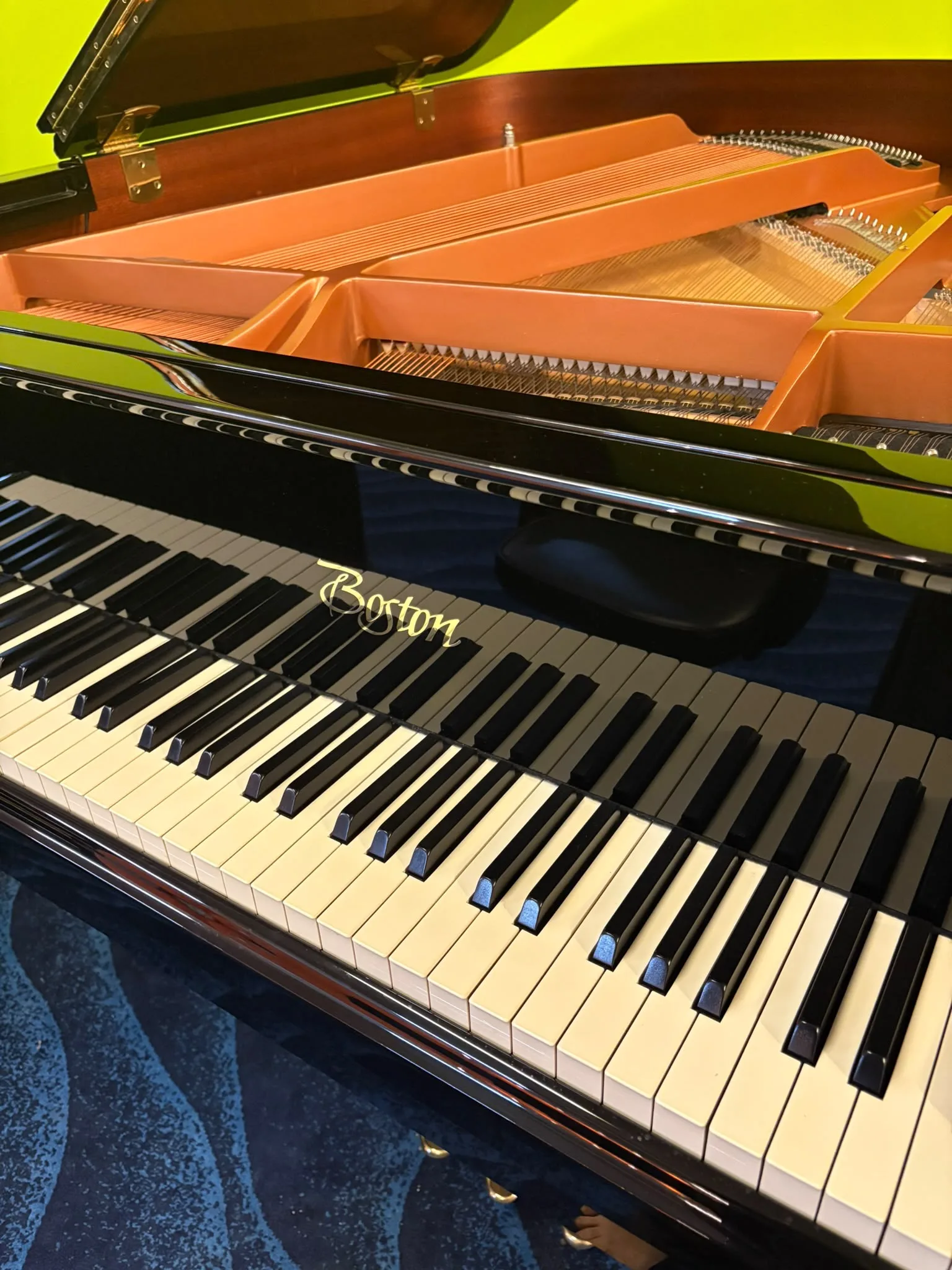
It is its own instrument rather than a Kawai with a different name on the fallboard. One difference a player feels straight away is the action: a Boston uses a traditional all wood action, where Kawai fits a composite one to its own grands. The Boston in these photographs was taken on our viewing gallery floor at IMM.
Type
Grand piano
Condition
Pre-owned, prepared
Ask for current availability and price
Who it suits
Worth your time if.
A player who has outgrown an upright and wants a grand built to a serious design
A teacher who wants a grand in the studio without a Steinway price
A home or a small hall where a grand has room to open up
Someone weighing a used Boston against a new grand for the same money
Buying one used
Four things to check, in order.
The same four we check ourselves before an instrument goes on the floor. Every instrument is an original used piano. Not reconditioned, not rebuilt. Ask us about any of them on a specific piano and you get a straight answer.
The serial numberIt dates the instrument precisely, which is the first thing to know about any used grand.
The actionA grand should repeat evenly across all eighty eight keys. Uneven touch is a regulation job, which can be done, but it belongs in the price.
Soundboard and bridgesLook for cracks, and for bridge pins that have pulled. This is the part of a grand that is expensive to put right.
Where it has livedAsk about its service history and previous room conditions. Air conditioning alone does not establish the condition of an instrument.
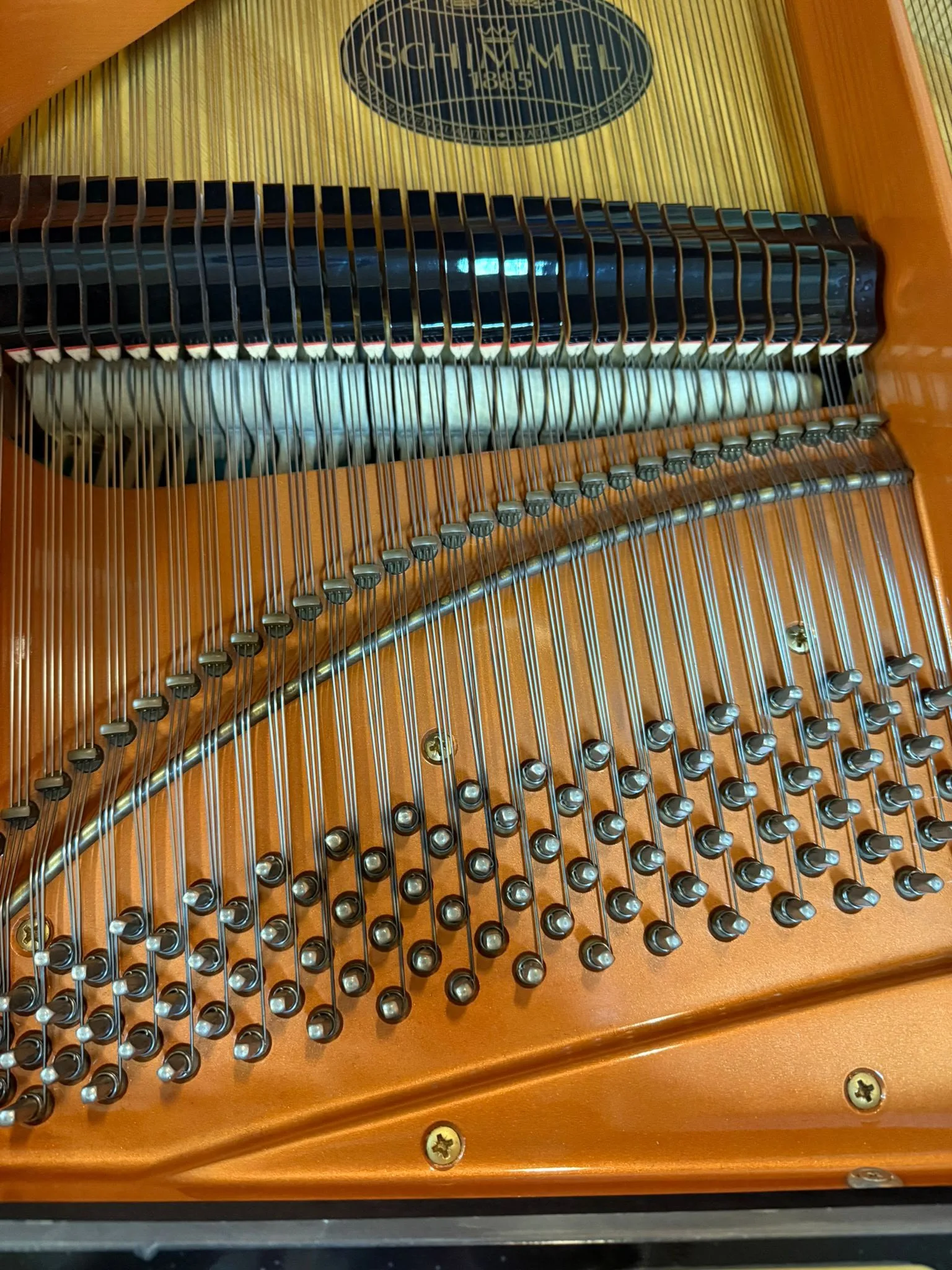
Two grands from two different traditions. The Boston is a Steinway design built in Japan, the Schimmel a German instrument from a firm founded in 1885. Which suits you is a question of touch and tone, and the only way to settle it is to play both.
Both, back to back, in the same room on the same afternoon. That is a fifteen minute job at the viewing gallery and it settles the question far better than any page can.
It is designed by Steinway and Sons and sold under the Boston name, but it is not a Steinway branded instrument. The grands are built for Steinway by Kawai in Japan. Think of it as Steinway design at a lower price rather than a Steinway at a discount.
Is a Boston just a Kawai with a different name?
No. Kawai builds it, but to Steinway’s design, and the two differ in ways a player can feel. The Boston uses a traditional all wood action, for example, where Kawai grands use a composite one.
How much is a second hand Boston grand in Singapore?
It depends on the size, the year and the condition, so a single figure would be a guess. Ask about a specific instrument and you get a specific price. If there is no Boston on the floor we will tell you, and tell you what is close.
Can I play it before deciding?
Yes, and you should. Come to the viewing gallery at IMM, sit down at it, and play it against another grand on the same afternoon. Bring your teacher if that helps.
The rest of the range
Other grands people ask about.
All grands
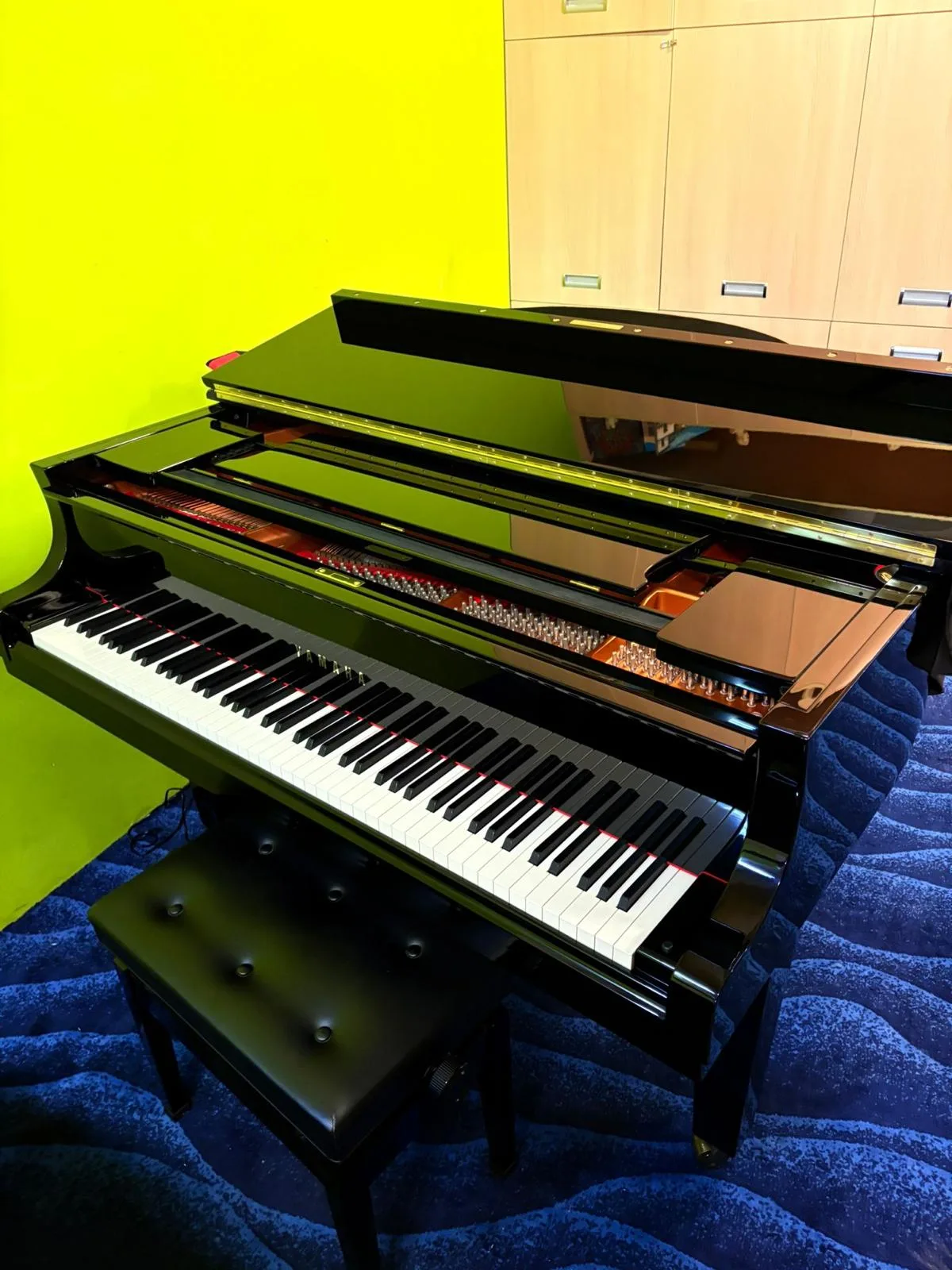
Around six feet
180 cm and up
The size people ask for by name is around six feet. It is long enough to behave like a proper grand and short enough to place in a home or a small hall, which is why it is the most requested length we see.
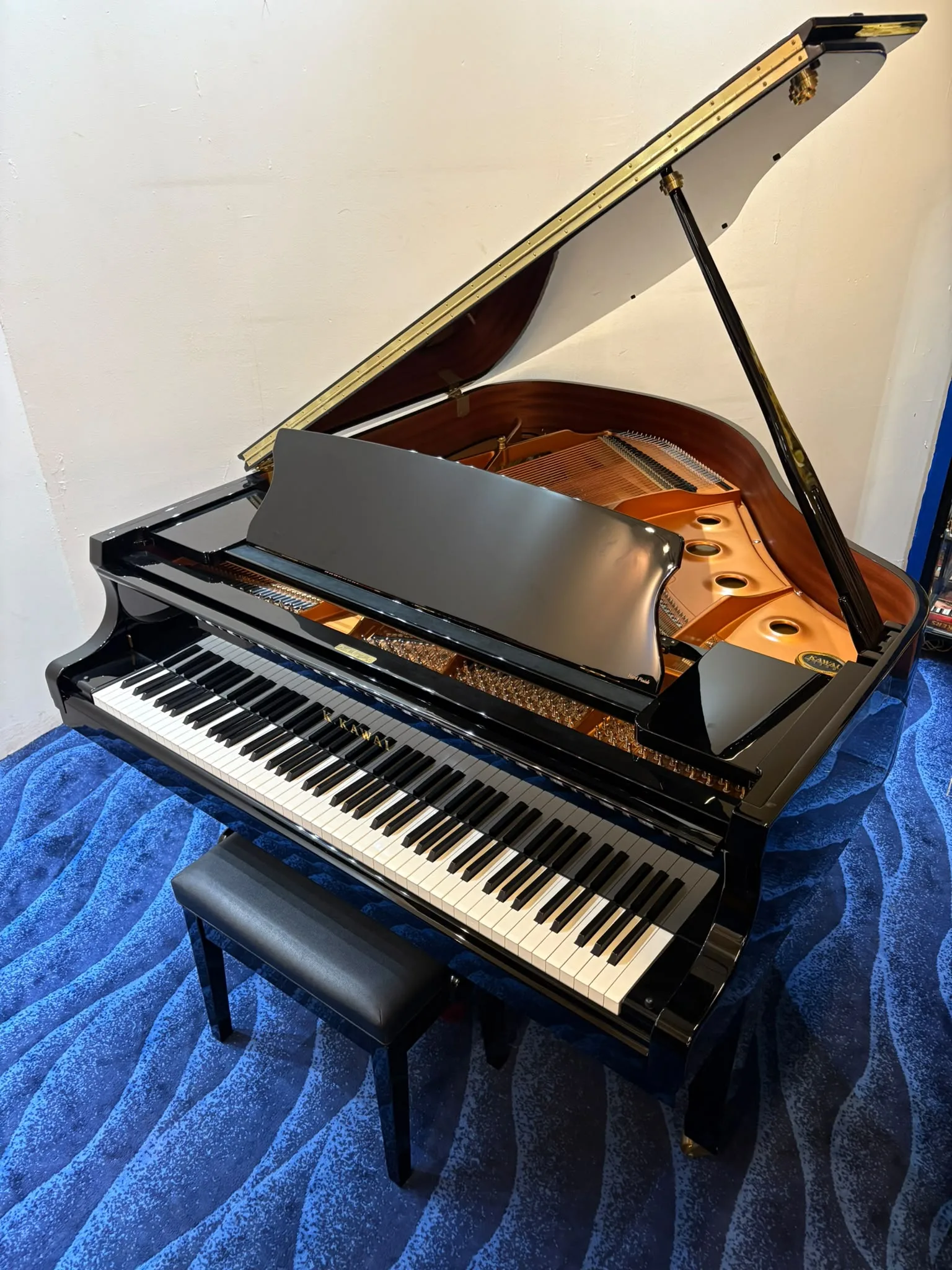
A 166 cm grand from Kawai’s GX BLAK series, photographed at our IMM gallery. Confirm the available instrument, its manufacture year and quotation before visiting; the photographs are not a live stock list.
A German grand from a maker that has built pianos since 1885. The one we photographed carries Made in Germany on its keyboard and the Schimmel crest inside the case.
Message us with the model and we will tell you what is in, what condition it is in, and what it costs. If we have nothing suitable we will say that instead.